Why Am I Waking Up in the Middle of the Night? Stress, Sleep & Your Nervous System

You fall asleep without a problem, but a few hours later you're suddenly wide awake.
Maybe it's 2:00 AM. Maybe it's 3:30 AM. Your body feels tired, but your mind starts racing—and getting back to sleep feels almost impossible.
Occasionally waking during the night is normal. But when it happens regularly, it may be worth looking beyond your bedtime routine.
Stress, nervous system activity, lifestyle habits, and underlying health factors can all influence the quality of your sleep.
Why Do I Keep Waking Up at Night?
Healthy sleep isn't simply about getting eight hours in bed. Throughout the night, your body moves through different stages of sleep that support physical recovery, memory, hormone regulation, immune function, and overall health.
Several factors can interfere with this process, including:
Chronic stress
Anxiety or racing thoughts
Alcohol or caffeine
Changes in your sleep schedule
Digestive discomfort
Blood sugar fluctuations
Hormonal changes
Certain medications
Sleep disorders
Environmental factors such as light, noise, or temperature
That's why persistent sleep problems deserve a broader look than simply asking, "How can I fall asleep faster?"
The Connection Between Stress and Sleep
Your nervous system is constantly responding to what's happening around you.
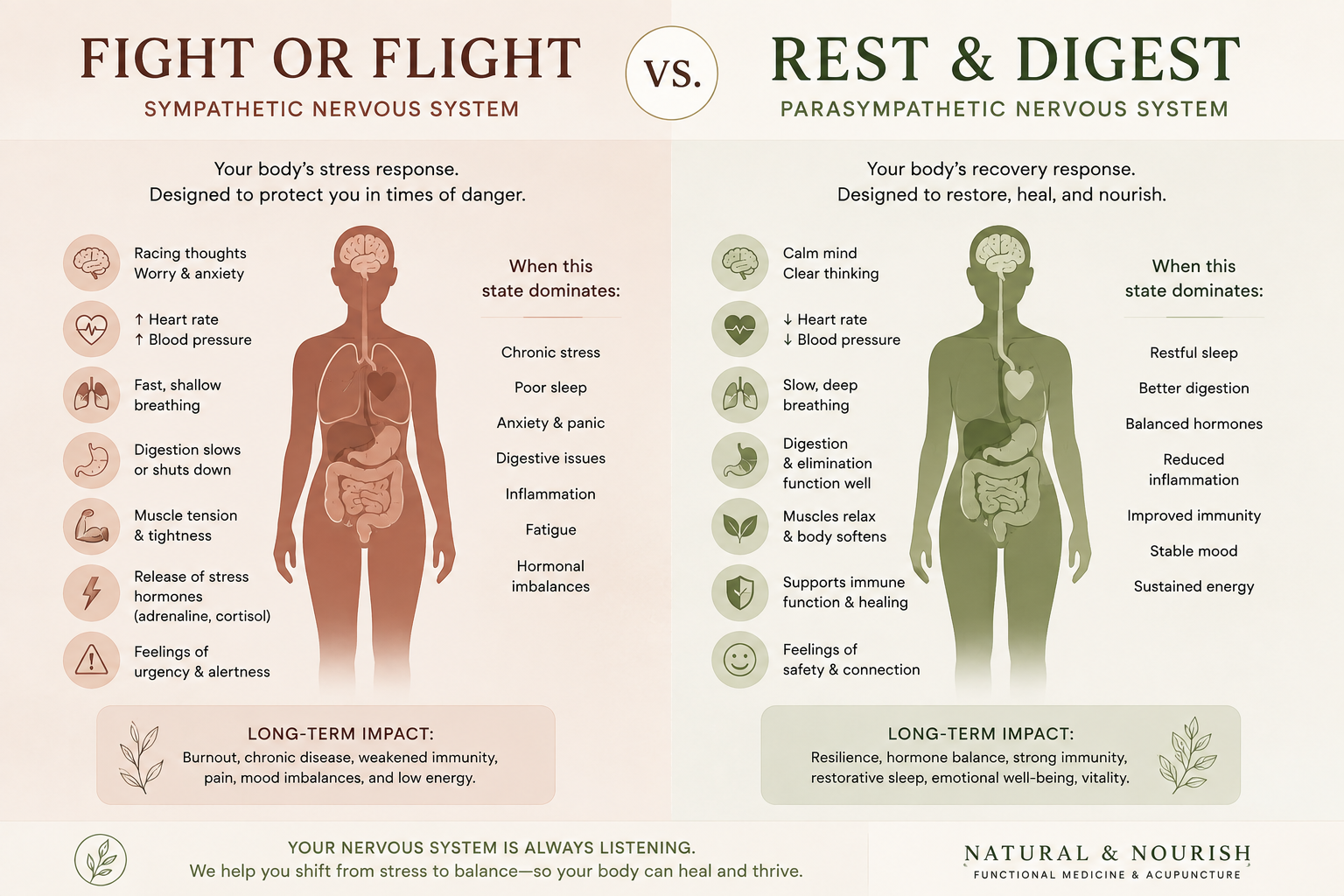
During periods of stress, your body's sympathetic nervous system—often described as the fight-or-flight response—becomes more active.
This response is useful when you actually need to react to danger. But chronic emotional, physical, or lifestyle stress can make it more difficult for the body to transition into the relaxed state needed for restorative sleep.
You may notice:
Difficulty shutting your mind off
Feeling tired but wired
Waking frequently
Muscle tension
Increased heart rate
Restlessness
Digestive problems
Waking up feeling unrefreshed
Sometimes the problem isn't simply that you're "bad at sleeping." Your body may be having difficulty shifting out of a heightened state of alertness.
Why Sleep and Gut Health Are Connected
The relationship between sleep and digestion goes both ways.
Stress can affect digestive function, while digestive discomfort can make quality sleep more difficult.
Bloating, reflux, abdominal discomfort, irregular bowel movements, or eating large meals close to bedtime can interfere with your ability to rest comfortably.
This is one reason we don't necessarily look at sleep as an isolated problem.
Your digestion, stress levels, nutrition, daily habits, and nervous system can all be part of the same picture.
Could Hormones Play a Role?
Hormonal changes can also affect sleep.
This can become particularly noticeable for women during perimenopause and menopause, when changes in hormones may contribute to night sweats, temperature changes, mood changes, and disrupted sleep.
Stress hormones are another part of the picture. Your body's stress-response system follows a daily rhythm, and chronic stress or inconsistent sleep patterns may affect that rhythm.
This doesn't mean every person who wakes at 3 AM has a "cortisol problem." Sleep disruption can have many causes, which is why individualized evaluation is important.
How Can You Support Better Sleep Naturally?
There isn't one perfect sleep routine for everyone, but several habits can help create an environment that supports healthy sleep.
Keep a Consistent Schedule
Try going to bed and waking up around the same time each day. Consistency helps reinforce your body's natural sleep-wake rhythm.
Reduce Evening Stimulation
Bright screens, work emails, stressful conversations, and stimulating content immediately before bed can make winding down more difficult.
Give your brain time to transition.
Watch Your Caffeine
Caffeine can remain in the body for hours. If you're struggling with sleep, consider whether afternoon coffee, energy drinks, or other sources of caffeine could be contributing.
Create a Wind-Down Routine
Reading, gentle stretching, breathing exercises, meditation, or a warm shower can help signal that the day is ending.
Pay Attention to Nutrition
What you eat—and when you eat—may affect how you feel overnight. Personalized nutrition can be especially helpful when sleep disruption occurs alongside digestive problems, blood sugar concerns, or other symptoms.
Where Does Acupuncture Fit In?
Acupuncture is commonly used as a complementary approach for stress management and sleep concerns.
Treatment involves placing very thin, sterile needles at specific points on the body. Research continues to explore how acupuncture may influence nervous system activity and sleep.
At Natural & Nourish, we use acupuncture as part of a personalized approach rather than treating every person with sleep problems the same way.
We consider what else is happening in your health—including stress, digestion, energy, lifestyle, and other symptoms—to determine the most appropriate approach.
Looking Beyond the Symptom
If you're repeatedly waking during the night, the goal shouldn't necessarily be to find something that simply makes you sleep.
The better question may be:
What is interfering with my body's ability to get restorative sleep?
Sometimes improving sleep means addressing stress. Sometimes nutrition or lifestyle plays a significant role. Other times, additional medical evaluation may be necessary.
Persistent sleep disruption, significant snoring or breathing interruptions, severe daytime sleepiness, or new and unexplained sleep changes should be discussed with an appropriate healthcare provider.
A More Personalized Approach to Better Sleep
At Natural & Nourish in Carlsbad, we take a whole-person approach to wellness.
Through personalized nutrition, functional lab testing when appropriate, lifestyle support, and acupuncture, we help our patients better understand the factors that may be contributing to how they feel.
Better sleep isn't just about feeling less tired tomorrow.
Quality sleep supports your mood, energy, digestion, immune function, and ability to handle the demands of everyday life.
Ready to understand what's getting in the way of better sleep?
Schedule a consultation with Natural & Nourish and discover a personalized approach to restoring balance naturally.