
What Are GLP-1 Medications?
GLP-1 stands for glucagon-like peptide-1, a hormone naturally produced in the digestive system that helps regulate appetite, blood sugar, and digestion.
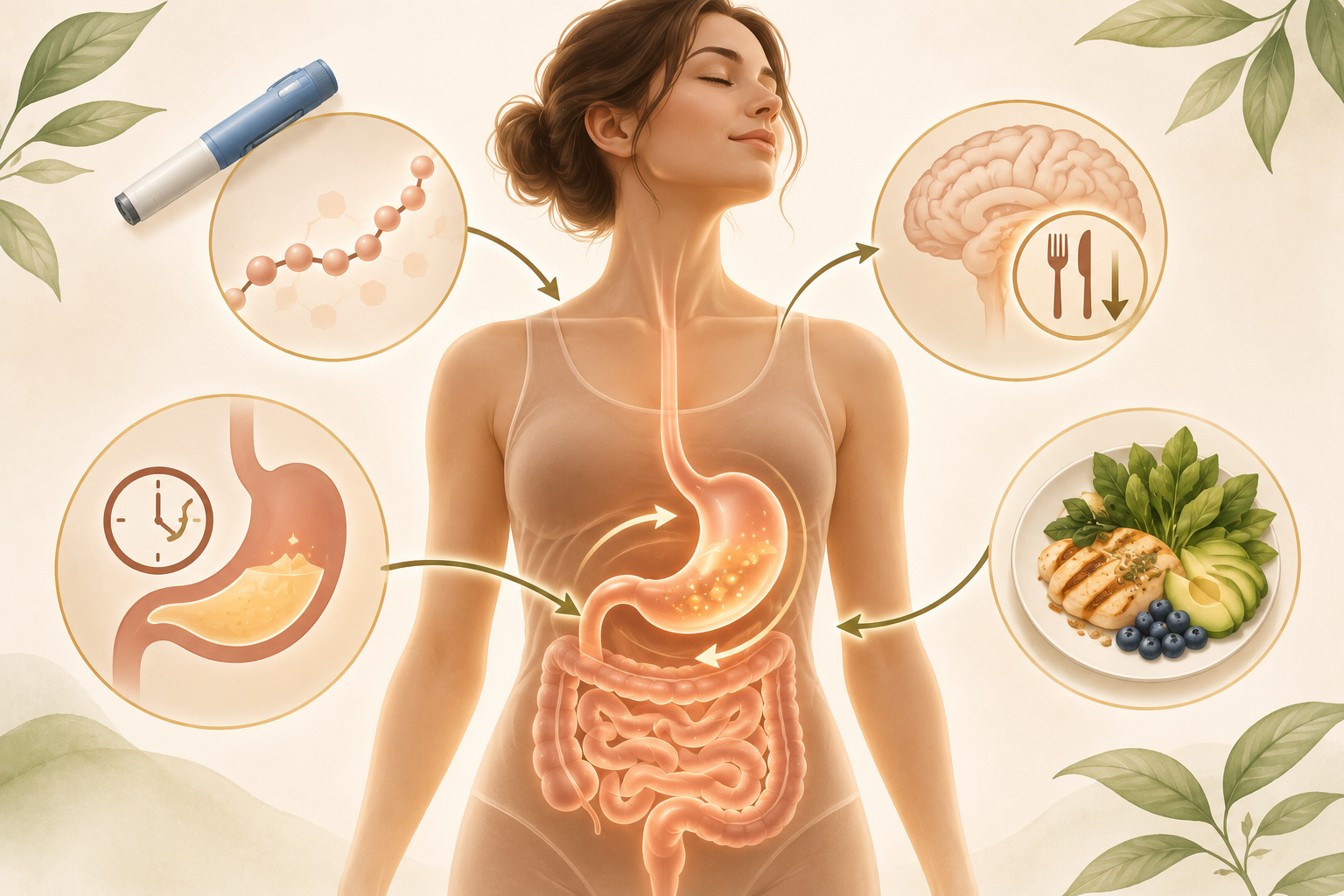
Medications such as semaglutide (Ozempic and Wegovy) mimic the activity of this hormone.
Tirzepatide (Mounjaro and Zepbound) works somewhat differently by activating both GLP-1 and GIP receptors, which are involved in metabolic regulation.
Depending on the medication, these treatments can:
Reduce appetite and food intake
Increase feelings of fullness
Improve blood sugar regulation
Slow stomach emptying
Support clinically meaningful weight loss
Although these medications can be effective, they also influence normal digestive processes.
How Do GLP-1 Medications Affect Digestion?
One important effect of GLP-1 medications is that they can slow the rate at which food leaves the stomach.
This contributes to feelings of fullness and can help reduce overall food intake.
However, slower gastric emptying can also contribute to uncomfortable digestive symptoms.
Some of the most commonly reported side effects include:
Nausea
Constipation
Diarrhea
Bloating
Abdominal discomfort
Acid reflux or belching
Feeling excessively full after small meals
For some individuals, these symptoms improve as the body adjusts to treatment. For others, digestive concerns can become persistent and interfere with eating adequately.
Severe or ongoing symptoms should be discussed with the prescribing clinician. Persistent vomiting, inability to maintain hydration, or severe abdominal pain requires prompt medical evaluation.
Why Gut Health Matters During GLP-1 Treatment
Your digestive system does much more than process food.
It plays an important role in nutrient absorption, immune function, metabolism, and communication with the nervous system.
When appetite decreases significantly, some people begin eating much smaller portions or skipping meals altogether.
Although this may support weight loss, consistently inadequate food intake can create additional concerns.
These may include:
Insufficient protein intake
Low dietary fiber
Inadequate vitamin and mineral intake
Dehydration
Constipation
Loss of lean muscle mass
This is why nutritional support can be valuable during GLP-1 treatment.
The goal isn't simply to eat less. It's to ensure your body continues receiving the nutrients it needs.
The Importance of Preserving Muscle During Weight Loss
One often-overlooked aspect of weight loss is the potential loss of lean body mass.
When body weight decreases, some of that weight may come from muscle rather than body fat.
Maintaining muscle is important for strength, physical function, metabolic health, and healthy aging.
Strategies that may help preserve muscle during weight loss include:
Prioritizing Protein
Adequate protein supports muscle maintenance and recovery. Individual protein needs depend on body weight, activity level, medical history, and other factors.
Resistance Training
Strength training provides an important stimulus for maintaining muscle during periods of reduced calorie intake.
Avoiding Excessive Restriction
Eating too little can make it difficult to meet nutritional needs, particularly when appetite is already suppressed.
Monitoring Body Composition
Changes in strength, physical function, and body composition may provide useful information beyond the number on the scale.
Can GLP-1 Medications Cause Constipation and Bloating?
Yes. Constipation and bloating are recognized side effects of GLP-1-based medications.
Several factors may contribute, including changes in gastrointestinal motility, reduced food intake, inadequate fluid consumption, and lower dietary fiber intake.
For some individuals, gradually increasing tolerated fiber, maintaining hydration, and incorporating regular movement may help.
However, not every digestive symptom should automatically be attributed to medication.
Persistent symptoms deserve appropriate evaluation, especially when they are new, severe, or worsening.
Supporting Your Body Through Nutrition

One important question is what happens after treatment ends.
Research shows that weight regain is common after discontinuing GLP-1-based medications.
This is partly because the appetite-regulating effects of the medication diminish after treatment stops.
That doesn't mean treatment has failed. Obesity is a chronic, complex condition, and some individuals benefit from ongoing medical treatment.
It does highlight the importance of building sustainable habits that support long-term health, whether someone continues medication or eventually discontinues it under medical supervision.
Nutrition, physical activity, sleep, and behavioral support remain important components of comprehensive weight management.
What Happens When You Stop Taking GLP-1 Medications?
A personalized nutrition plan can help individuals maintain adequate nourishment while taking GLP-1 medications.
Some helpful strategies include:
Focus on Nutrient-Dense Foods
Choose foods that provide protein, essential fats, vitamins, minerals, and fiber without requiring excessively large meals.
Eat Smaller, Balanced Meals
Large or high-fat meals may worsen nausea or uncomfortable fullness for some individuals. Smaller meals may be easier to tolerate.
Stay Hydrated
Adequate hydration supports normal bodily function and can be particularly important when experiencing constipation, diarrhea, or reduced appetite.
Support Healthy Bowel Movements
Fiber-rich foods, adequate fluids, and regular physical activity can help support bowel regularity when tolerated.
Pay Attention to Your Body
Persistent nausea, vomiting, significant abdominal discomfort, or difficulty eating should not be ignored.
Your prescribing clinician may need to reassess your treatment plan.
A Whole-Body Approach to Metabolic Health
At Natural & Nourish, we recognize that metabolic health involves more than body weight alone.
Nutrition, sleep, stress, digestive function, physical activity, and medical history all influence overall well-being.
For individuals taking GLP-1 medications, personalized nutritional guidance may help support adequate protein intake, digestive comfort, and sustainable lifestyle habits.
We also believe in collaboration with prescribing medical professionals to ensure care remains coordinated and appropriate.